
Omega-3 Dosage: How Much EPA and DHA Do You Need in 2026?
The label says "1,000mg omega-3" but only contains 300mg EPA+DHA. Learn the real dosing you need by age, weight, and health goal—backed by research.
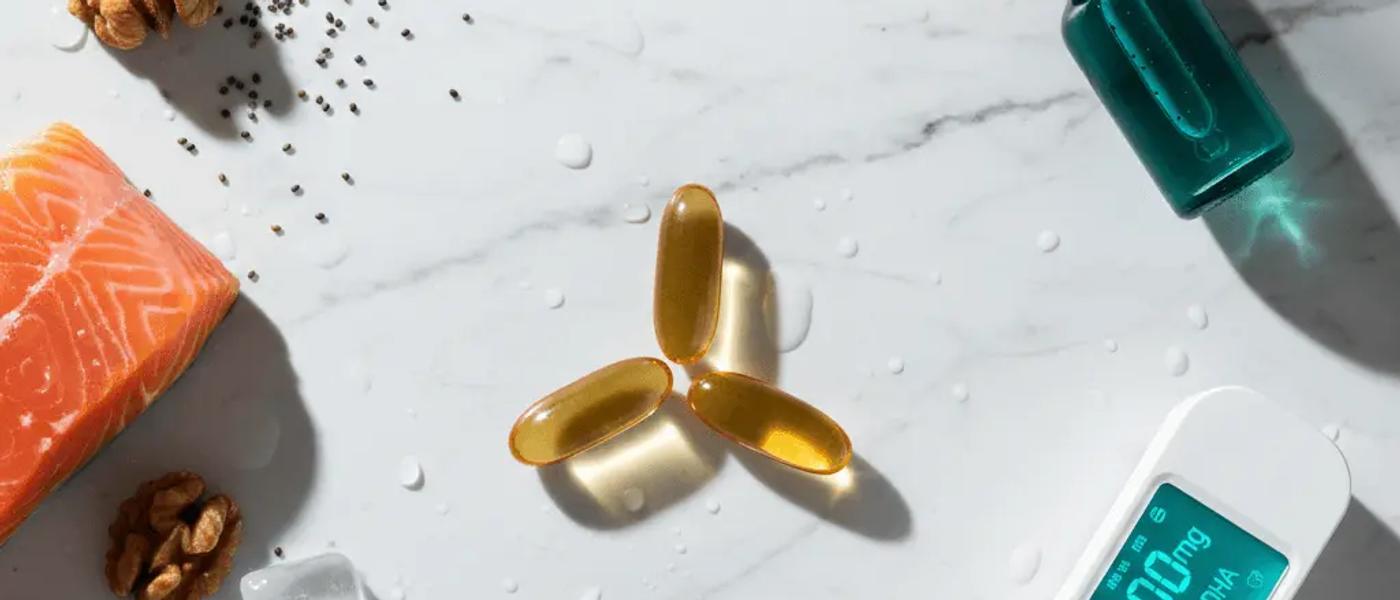
You're standing in the supplement aisle, staring at fish oil bottles. One says "1,000mg Omega-3." Another claims "2,400mg EPA+DHA." A third boasts "Triple Strength" but the fine print reveals only 600mg of actual omega-3s per capsule.
You leave empty-handed. Again.
Here's what nobody tells you: the number on the front of the bottle is marketing theater. What matters is the combined EPA (eicosapentaenoic acid) and DHA (docosahexaenoic acid) content—the two omega-3 fatty acids with the most robust clinical evidence for cardiovascular health, brain function, inflammation control, and cellular aging.
But how much do you actually need? Not the vague "supports heart health" language approved by regulators. The dose that moves biomarkers. The dose backed by intervention trials. The dose that makes omega-3 supplementation worth the money.
This is your evidence-based guide to omega-3 dosing in 2026: by age, health status, and therapeutic goal.
What are EPA and DHA, and why do they matter more than "total omega-3s"?
Omega-3 fatty acids are a family of polyunsaturated fats, but not all omega-3s function the same way in your body.
The three main types:
- ALA (alpha-linolenic acid): Found in flaxseeds, chia seeds, walnuts. Your body converts ALA to EPA and DHA at an efficiency rate of roughly 5-10% for EPA and <1% for DHA. Research in the American Journal of Clinical Nutrition shows this conversion is so inefficient that plant-based omega-3s cannot reliably raise EPA or DHA blood levels.
- EPA (eicosapentaenoic acid): The "anti-inflammatory" omega-3. EPA competes with arachidonic acid (an omega-6 fat) to produce less inflammatory signaling molecules. It's particularly beneficial for mood regulation, cardiovascular health, and systemic inflammation reduction.
- DHA (docosahexaenoic acid): The "structural" omega-3. DHA makes up 40% of the polyunsaturated fats in your brain and 60% in the retina. It supports cognitive function, neuroplasticity, fetal brain development, and cell membrane fluidity.
When you see "1,000mg fish oil" on a label, that's the total capsule weight—including EPA, DHA, other fatty acids, and filler oil. You might only be getting 300mg of EPA+DHA combined. Always check the supplement facts panel for the actual EPA and DHA content.
Dr. Rhonda Patrick extensively discusses on FoundMyFitness that EPA and DHA have distinct but complementary mechanisms. You need both, not just "omega-3s."
How much EPA and DHA does the average person need for basic health maintenance?
If you're metabolically healthy, not pregnant, and eating fish 2-3 times per week, you may not need supplementation at all. But most Europeans don't meet that threshold.
Baseline Recommendations (General Population):
- European Food Safety Authority (EFSA): 250mg EPA+DHA combined daily for cardiovascular health maintenance
- American Heart Association: 500mg EPA+DHA combined daily for adults without documented heart disease
- International Society for the Study of Fatty Acids and Lipids (ISSFAL): 500mg EPA+DHA combined daily minimum
These are minimum targets to prevent deficiency-related risks. They're not optimized for performance, longevity, or therapeutic outcomes.
A 2019 meta-analysis in Mayo Clinic Proceedings found that cardiovascular benefit becomes statistically significant at doses above 1,000mg EPA+DHA daily—double the baseline recommendation.
Practical Translation:
- Minimum: 250-500mg EPA+DHA daily (deficiency prevention)
- Optimal: 1,000-2,000mg EPA+DHA daily (health optimization)
What is the Omega-3 Index, and why does it matter more than dosage?
Dosage is input. The Omega-3 Index is output—the percentage of EPA and DHA in your red blood cell membranes. It's the most reliable biomarker for omega-3 tissue saturation.
Omega-3 Index Ranges:
- <4%: High cardiovascular risk
- 4-8%: Intermediate risk
- >8%: Cardioprotective zone (associated with lowest risk of cardiac events)
Research published in Atherosclerosis shows that individuals with an Omega-3 Index above 8% have a 30% lower risk of coronary heart disease compared to those below 4%.
Here's the problem: achieving an 8% Omega-3 Index requires different dosages for different people depending on:
- Baseline omega-6 to omega-3 ratio (high omega-6 intake competes with omega-3 absorption)
- Body weight (larger individuals require more)
- Genetic polymorphisms (some people are "poor incorporators" of EPA/DHA into cell membranes)
- Triglyceride form vs. ethyl ester form (absorption efficiency differs by 50-70%)
One person might hit 8% with 1,000mg daily. Another needs 3,000mg to reach the same level. This is why testing your biomarkers through a metabolic audit is essential—guessing dosage wastes money and time.
How much omega-3 do you need during pregnancy and breastfeeding?
DHA demand skyrockets during the third trimester and early lactation. Your baby's brain is accumulating DHA at 3-5mg per day during late pregnancy—and that's coming from your stores.
Pregnancy/Lactation Recommendations:
- EFSA: 100-200mg DHA daily (in addition to the 250mg EPA+DHA baseline)
- International consensus (multiple health organizations): 200-300mg DHA daily minimum during pregnancy
- Optimal range: 300-600mg DHA daily (especially if not consuming fatty fish regularly)
A Cochrane systematic review found that DHA supplementation during pregnancy reduces the risk of early preterm birth by 11% and low birth weight by 10%. The effective dose in these trials was typically 500-1,000mg DHA daily.
Warning: Pregnant women should avoid high-dose omega-3 (>3,000mg EPA+DHA) without medical supervision due to potential effects on blood clotting and labor timing.
Practical Translation:
- Minimum for pregnancy/lactation: 500mg DHA + 250mg EPA daily
- Optimal: 600-800mg DHA + 400mg EPA daily
Look for prenatal omega-3 formulas with higher DHA-to-EPA ratios (e.g., 3:1 or 4:1 DHA:EPA rather than the typical 2:1 or 1:1 found in standard fish oil).
What dosage is recommended for children and adolescents?
Children's omega-3 needs scale with body weight and developmental stage. The brain continues myelinating (building fatty sheaths around neurons) through adolescence, making DHA particularly important.
Pediatric Dosing Guidelines:
- Ages 2-4: 100-150mg EPA+DHA combined daily
- Ages 4-6: 150-200mg EPA+DHA combined daily
- Ages 6-10: 200-250mg EPA+DHA combined daily
- Ages 10-18: 250-500mg EPA+DHA combined daily (adult dosing applies after puberty)
Research in the Journal of Pediatrics suggests that children with ADHD or learning difficulties may benefit from higher doses (500-1,000mg EPA+DHA daily), though clinical guidance is essential before exceeding baseline recommendations.
Practical Note: Many children won't swallow capsules. Look for:
- Liquid fish oil (flavored with lemon or orange to mask taste)
- Chewable gummies (verify EPA+DHA content, as many are mostly filler)
- Emulsified formulas (easier to disguise in smoothies)
How much omega-3 do older adults need for cognitive health?
Aging brains show reduced DHA uptake and increased oxidative stress. By age 65+, maintaining optimal omega-3 status becomes critical for cognitive resilience.
Older Adult Dosing (Ages 65+):
- Maintenance (no cognitive decline): 1,000-1,500mg EPA+DHA daily
- Mild cognitive impairment (MCI): 1,500-2,000mg EPA+DHA daily
- Family history of Alzheimer's or APOE4 carriers: 2,000-3,000mg DHA-focused daily
The MIDAS trial published in Alzheimer's & Dementia found that 2,000mg DHA daily improved cognitive function in older adults with mild memory complaints. Importantly, the benefit was most pronounced in APOE4 non-carriers and when started before significant cognitive decline.
Key Insight: Omega-3 supplementation appears most effective for prevention rather than reversal of dementia. If you're waiting until diagnosis, you've likely waited too long.
Dr. Dale Bredesen's research on preventing cognitive decline emphasizes achieving an Omega-3 Index above 8% as part of a comprehensive metabolic optimization protocol.
Practical Translation for Older Adults:
- Start with 1,500mg EPA+DHA daily
- Retest Omega-3 Index after 4-6 months
- Adjust to 2,000-2,500mg if index remains below 8%
What is the therapeutic dose for cardiovascular disease?
If you have documented cardiovascular disease (prior heart attack, stent placement, coronary artery disease), omega-3 dosing shifts from preventive to therapeutic.
Cardiovascular Therapeutic Dosing:
- Established heart disease: 2,000-4,000mg EPA+DHA daily
- High triglycerides (>200 mg/dL): 2,000-4,000mg EPA daily (prescription-grade)
- Post-MI (heart attack) recovery: 1,000mg EPA+DHA daily minimum
The REDUCE-IT trial, published in the New England Journal of Medicine, used 4,000mg EPA daily (Vascepa/icosapent ethyl) and demonstrated a 25% reduction in major cardiovascular events compared to placebo.
The VITAL trial, however, showed mixed results with 840mg EPA+DHA daily, suggesting dose matters significantly. Higher doses (>2,000mg EPA) show clearer benefit.
Important: Prescription omega-3 products (like Vascepa, Lovaza) contain highly concentrated EPA or EPA+DHA in ethyl ester or free fatty acid forms at pharmaceutical purity. Over-the-counter supplements vary wildly in quality.
Practical Translation for Heart Disease:
- Work with your cardiologist to determine appropriate dosing
- Prescription omega-3 may be indicated for triglycerides >200 mg/dL
- Monitor for bleeding risk if on anticoagulants (warfarin, DOACs)
How much omega-3 helps with inflammation and autoimmune conditions?
Chronic inflammation underlies most degenerative diseases: cardiovascular disease, type 2 diabetes, rheumatoid arthritis, inflammatory bowel disease, and even depression.
Anti-Inflammatory Dosing:
- General inflammation (elevated hs-CRP): 1,500-2,000mg EPA+DHA daily
- Rheumatoid arthritis: 2,700-3,000mg EPA+DHA daily
- Inflammatory bowel disease (Crohn's, UC): 2,000-4,000mg EPA+DHA daily
- Major depression: 1,000-2,000mg EPA daily (EPA-dominant formulas preferred)
A meta-analysis in Brain, Behavior, and Immunity found that omega-3 supplementation (1,000-2,000mg EPA+DHA daily) reduces inflammatory biomarkers like IL-6, TNF-alpha, and CRP in chronically inflamed populations.
For depression specifically, research suggests EPA is more effective than DHA. Look for formulations with EPA:DHA ratios of 2:1 or higher.
If you're dealing with metabolic inflammation—especially related to rapid weight loss on GLP-1 medications—understanding how to preserve lean tissue during caloric deficit becomes equally important as managing inflammation through omega-3s.
Practical Translation for Inflammation:
- Target hs-CRP <1.0 mg/L (measured via bloodwork)
- Start with 2,000mg EPA+DHA daily for 8-12 weeks
- Retest hs-CRP; adjust dose if not below target
Does body weight affect how much omega-3 you need?
Yes. Larger individuals require higher absolute doses to achieve the same tissue saturation.
Weight-Adjusted Dosing:
- <70kg (154 lbs): 1,000-1,500mg EPA+DHA daily
- 70-90kg (154-198 lbs): 1,500-2,000mg EPA+DHA daily
- >90kg (198 lbs): 2,000-3,000mg EPA+DHA daily
This is a rough guideline. The Omega-3 Index test eliminates guesswork, but if you're not testing, body weight provides a reasonable proxy for dose adjustment.
Athletes with high lean mass may need even more—3,000-4,000mg EPA+DHA daily—due to increased metabolic turnover and inflammation from training stress.
What's the maximum safe dose of omega-3?
The tolerable upper limit set by most health organizations is 3,000mg EPA+DHA daily from supplements (in addition to dietary sources) for the general population.
Safety Considerations:
- Bleeding risk: Omega-3s have mild anticoagulant effects. Doses above 3,000mg may increase bleeding risk, especially if combined with aspirin, warfarin, or other blood thinners.
- Immune suppression: Very high doses (>5,000mg) may suppress immune function in some individuals.
- Oxidative stress: Omega-3 fats are highly unsaturated and prone to oxidation. High-dose supplementation without adequate antioxidant intake (Vitamin E, astaxanthin) may increase lipid peroxidation.
EFSA's 2012 safety review concluded that up to 5,000mg EPA+DHA daily is safe for most adults, but most clinicians recommend staying below 3,000-4,000mg unless under medical supervision.
Practical Translation:
- General population: Stay at or below 3,000mg EPA+DHA daily
- Therapeutic dosing (heart disease, severe inflammation): Up to 4,000mg with medical oversight
- Always disclose omega-3 supplementation to surgeons (stop 1-2 weeks before elective surgery)
Does the form of omega-3 (triglyceride vs. ethyl ester) affect dosage?
Absolutely. Absorption efficiency differs by 50-70% depending on molecular form.
Omega-3 Forms:
- Triglyceride form (natural fish oil): EPA and DHA bound to glycerol backbone. Best absorption, especially when taken with fat-containing meals.
- Ethyl ester form: EPA and DHA attached to ethanol (common in cheaper supplements and some prescription products). Lower absorption unless taken with high-fat meals.
- Re-esterified triglyceride form: Ethyl ester converted back to triglyceride structure. Best of both worlds—high concentration and high absorption.
- Phospholipid form (krill oil): EPA and DHA bound to phospholipids. Higher bioavailability but lower absolute EPA+DHA content per capsule.
Research in Lipids shows that re-esterified triglyceride forms increase blood EPA+DHA levels by 50-70% compared to ethyl ester forms at the same dose.
Practical Impact:
- If your supplement is ethyl ester form and you need 2,000mg EPA+DHA, you may need to take 3,000mg to achieve the same tissue saturation as 2,000mg triglyceride form.
- Always take omega-3 supplements with food (especially fat) to maximize absorption.
Check your supplement label. Most will specify "triglyceride form" or "ethyl ester form" in fine print. Moana Natura's Omega-3 formula uses re-esterified triglyceride form for maximum bioavailability—meaning you get more EPA and DHA into your tissues per capsule.
How long does it take to see results from omega-3 supplementation?
Omega-3 incorporation into cell membranes is gradual. Don't expect overnight results.
Timeline:
- 2-4 weeks: Triglyceride levels begin to decrease (if elevated)
- 6-8 weeks: Inflammatory markers (hs-CRP) start to improve
- 8-12 weeks: Omega-3 Index reaches 50% of maximum achievable level
- 4-6 months: Full saturation; cognitive and mood benefits become more apparent
- 6-12 months: Structural benefits (skin, joint health) stabilize
Research from OmegaQuant shows that most people reach steady-state Omega-3 Index after 4-6 months of consistent supplementation.
Key Point: If you quit after 4 weeks because you "don't feel different," you've quit before the molecular changes have time to translate into subjective benefits.
Should I take EPA and DHA separately or combined?
For most people, a balanced EPA+DHA formula (ratio between 2:1 and 1:1) is ideal. But certain conditions respond better to EPA- or DHA-dominant formulas.
EPA-Dominant (2:1 or 3:1 EPA:DHA):
- Depression and mood disorders
- Cardiovascular disease
- General inflammation reduction
DHA-Dominant (3:1 or 4:1 DHA:EPA):
- Pregnancy and lactation
- Cognitive decline prevention
- Eye health (retinal support)
Balanced (roughly 1:1 or 2:1 EPA:DHA):
- General health maintenance
- Broad-spectrum anti-inflammatory support
- Most people, most of the time
Research in Prostaglandins, Leukotrienes and Essential Fatty Acids suggests that EPA and DHA have synergistic effects when combined, so unless you have a specific therapeutic target, balanced formulas are preferred.
What about omega-3 from food versus supplements?
Food first, always. Fatty fish provide not just EPA and DHA, but also selenium, Vitamin D, protein, and other nutrients supplements can't replicate.
Omega-3 Content in Common Fish (per 100g):
- Mackerel: 2,500-5,000mg EPA+DHA
- Salmon (wild): 2,000-2,500mg EPA+DHA
- Sardines: 1,500-2,000mg EPA+DHA
- Anchovies: 1,500-2,000mg EPA+DHA
- Herring: 1,500-2,500mg EPA+DHA
- Tuna (fresh): 1,000-1,500mg EPA+DHA
Eating 2-3 servings (150-200g per serving) of fatty fish per week provides 1,500-3,000mg EPA+DHA weekly from food alone.
But if you:
- Don't eat fish due to taste preference, dietary restrictions, or access issues
- Have elevated triglycerides or cardiovascular disease requiring therapeutic doses
- Are pregnant and concerned about mercury exposure from fish
- Need consistent, measurable doses for biomarker optimization
...then supplementation becomes essential.
How do I choose a high-quality omega-3 supplement?
Not all fish oil is created equal. Oxidation (rancidity), contamination (mercury, PCBs), and misleading labeling plague the omega-3 market.
Quality Checklist:
- Third-party tested: Look for IFOS (International Fish Oil Standards) certification or similar independent lab verification
- Freshness indicators: Check the peroxide value (PV) and anisidine value (AV). Total oxidation (TOTOX) score should be <26.
- Form: Triglyceride or re-esterified triglyceride preferred over ethyl ester
- Source: Small fish (anchovies, sardines) have lower heavy metal contamination than large predatory fish
- Transparency: Manufacturer discloses exact EPA and DHA content per serving (not just "fish oil 1,000mg")
- Added antioxidants: Vitamin E, astaxanthin, or rosemary extract to prevent oxidation
ConsumerLab.com regularly tests omega-3 supplements and publishes contamination and label accuracy reports. Many popular brands fail to meet label claims or contain concerning levels of oxidation.
Marine-sourced omega-3s from sustainably caught small fish—like those used in premium omega-3 formulations—offer the best combination of purity, potency, and environmental responsibility.
Final thoughts: Dosage matters, but consistency matters more
You can take the "perfect" dose of omega-3 for three weeks, quit, and achieve nothing. Or you can take a moderate dose consistently for six months and transform your Omega-3 Index, inflammatory markers, and tissue resilience.
The supplement industry wants you to believe that more is always better. The science says: enough is enough, and enough depends on your body, your diet, your genetics, and your goals.
Here's the hierarchy:
- Eat fatty fish 2-3 times per week (if you can tolerate it and access it)
- Supplement to fill the gap (500-2,000mg EPA+DHA daily for most people)
- Test your Omega-3 Index (target >8% for optimal cardiovascular and cognitive protection)
- Adjust based on data, not marketing (your bloodwork tells you what you need)
If you're serious about longevity, metabolic health, and reducing the slow burn of chronic inflammation, omega-3 optimization isn't optional. But it's also not a guessing game.
Measure. Dose appropriately. Retest. Refine. That's how you turn "fish oil might help" into "my Omega-3 Index is 9.2% and my hs-CRP dropped from 3.1 to 0.6 mg/L."
That's not hope. That's biochemistry.
Experience Science-Backed Marine Nutrition
Discover our clinically-dosed formulations designed to support cognitive health and longevity.